On the same evening when I photographed the brown-eared bulbul from my previous post, I had also spotted a few other birds before and after that. At that point, I still did not really understand my camera settings, but my basic approach was simple: if I saw a bird, I would at least try to photograph it.
After the bulbul was gone, a group of sparrows came to the same area. Sparrows are birds I see all the time, but in winter they somehow look puffier and softer, which makes them especially cute. I also like the way they gather together up in the trees. I often notice groups of fluffy sparrows like that in the colder season, and it seems that sparrows tend to flock more in winter. It felt like one of those small moments where watching birds also makes you notice the season more clearly.
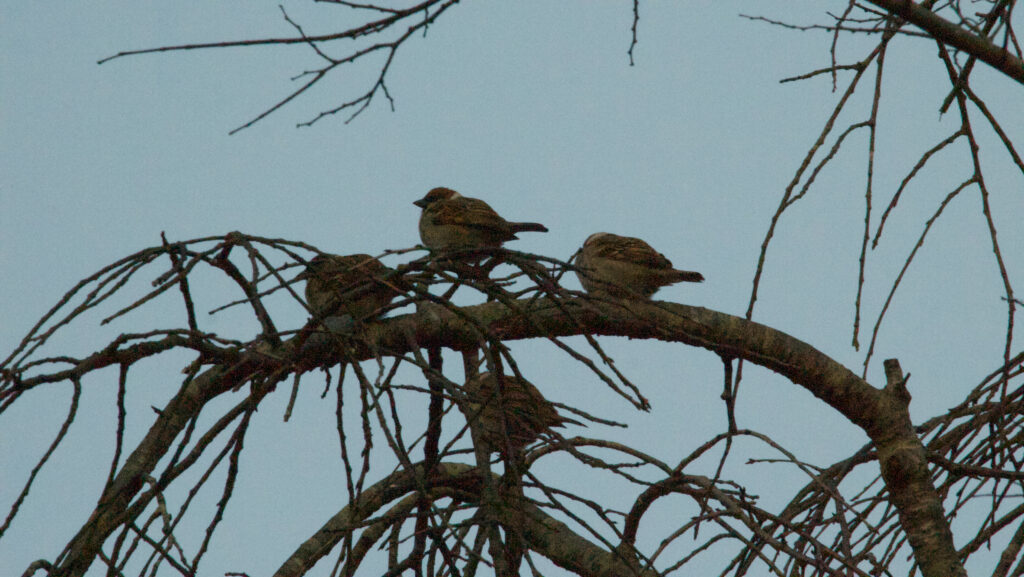
The sparrows were perched very high in the tree, and even with the lens zoomed all the way in, this was about as large as I could make them in the frame. Because it was already so dark, I tried setting the ISO higher just to get something usable. But when I looked back at the result, parts of the image were blown out and looked too bright. One of the shots was taken at ISO 4000, 300mm, f/22, and 1/250 second.
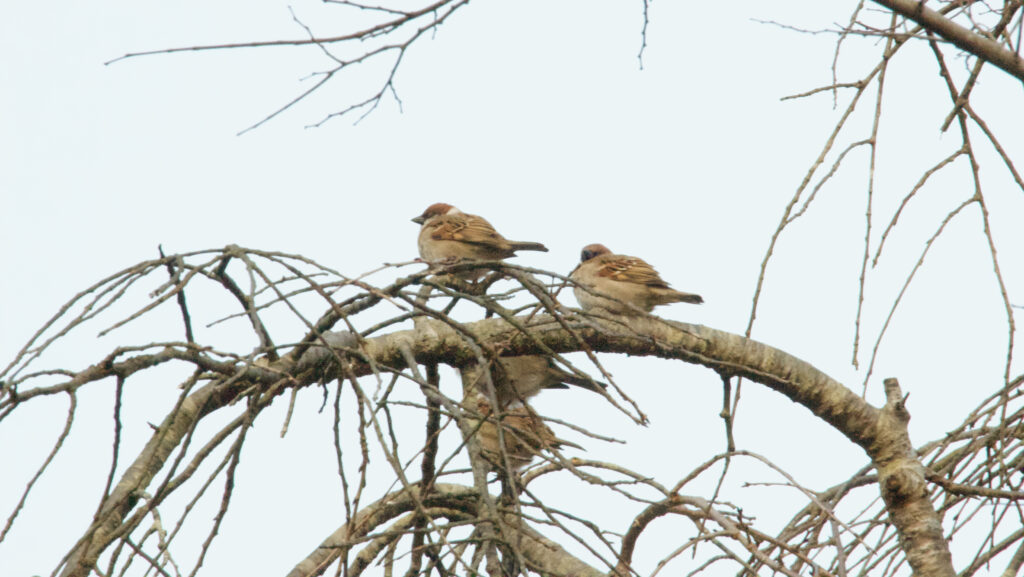
Another photo came out much brighter than the scene actually looked. But that did not mean it looked good. Instead, it ended up looking rough and grainy. One frame was recorded at ISO 4000, 300mm, f/20, and 1/60 second, and when I look at it now, I can see that simply making the image brighter does not solve the problem. There may be better ways to handle a situation like this, but I still do not know them yet, so I want to keep learning little by little.
I also saw a white wagtail, another bird I often come across, so I tried photographing that too. This turned out to be difficult for a different reason. It moved constantly. I do not think white wagtails are especially cautious birds in general, but this one did not come very close. It walked quickly, and with a telephoto lens it was hard for me to keep up. Even when I finally pressed the shutter, the bird was often off-center, blurred, or slightly out of focus. In the end, I did not get a single shot that felt successful.
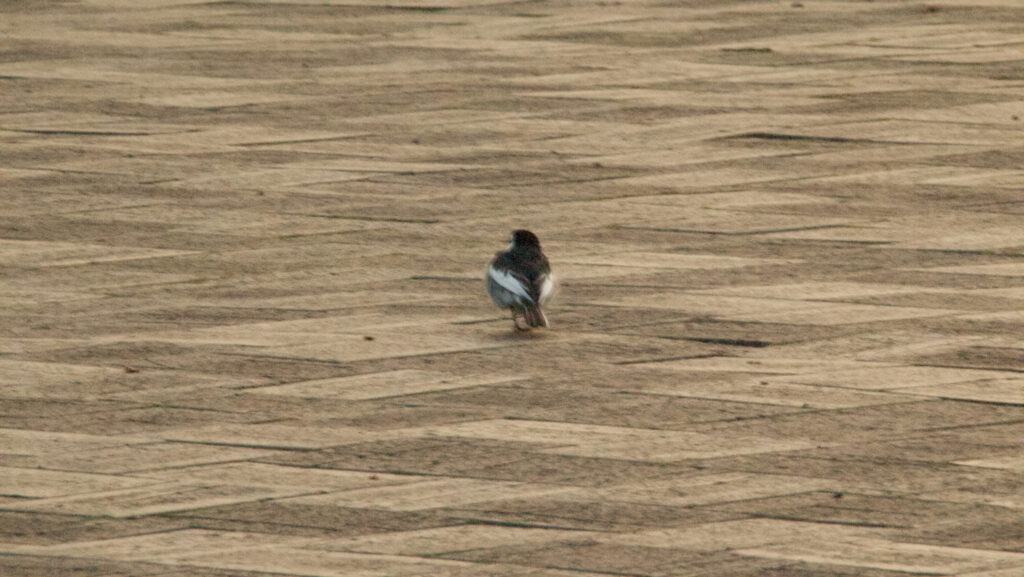
That experience made the basic problems feel very clear. Birds are small, they move quickly, and they are often farther away than you want. At moments like that, it honestly feels as if a smartphone might do just as well, or even better, simply because it is easier to handle. But at the same time, I can also tell that this is exactly the point where bird photography starts to become interesting. The problems are simple to describe, but not simple to solve.
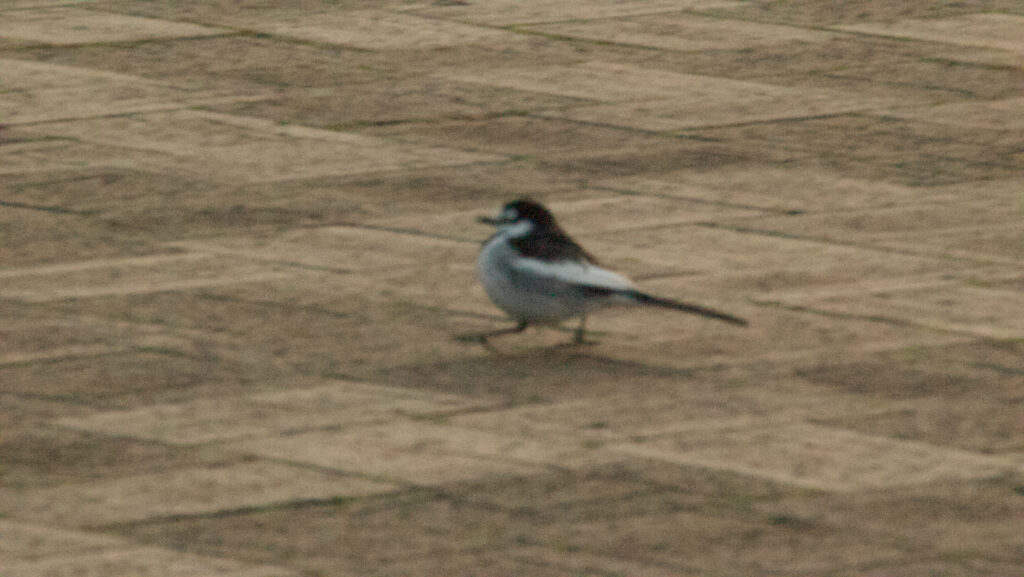
For now, I think the first things I need to try again are also simple. I need to get closer somehow, and I need to shoot while there is still more light. Besides the low light, I also want to understand better how to deal with speed and constant movement. That is probably the next thing I want to explore.