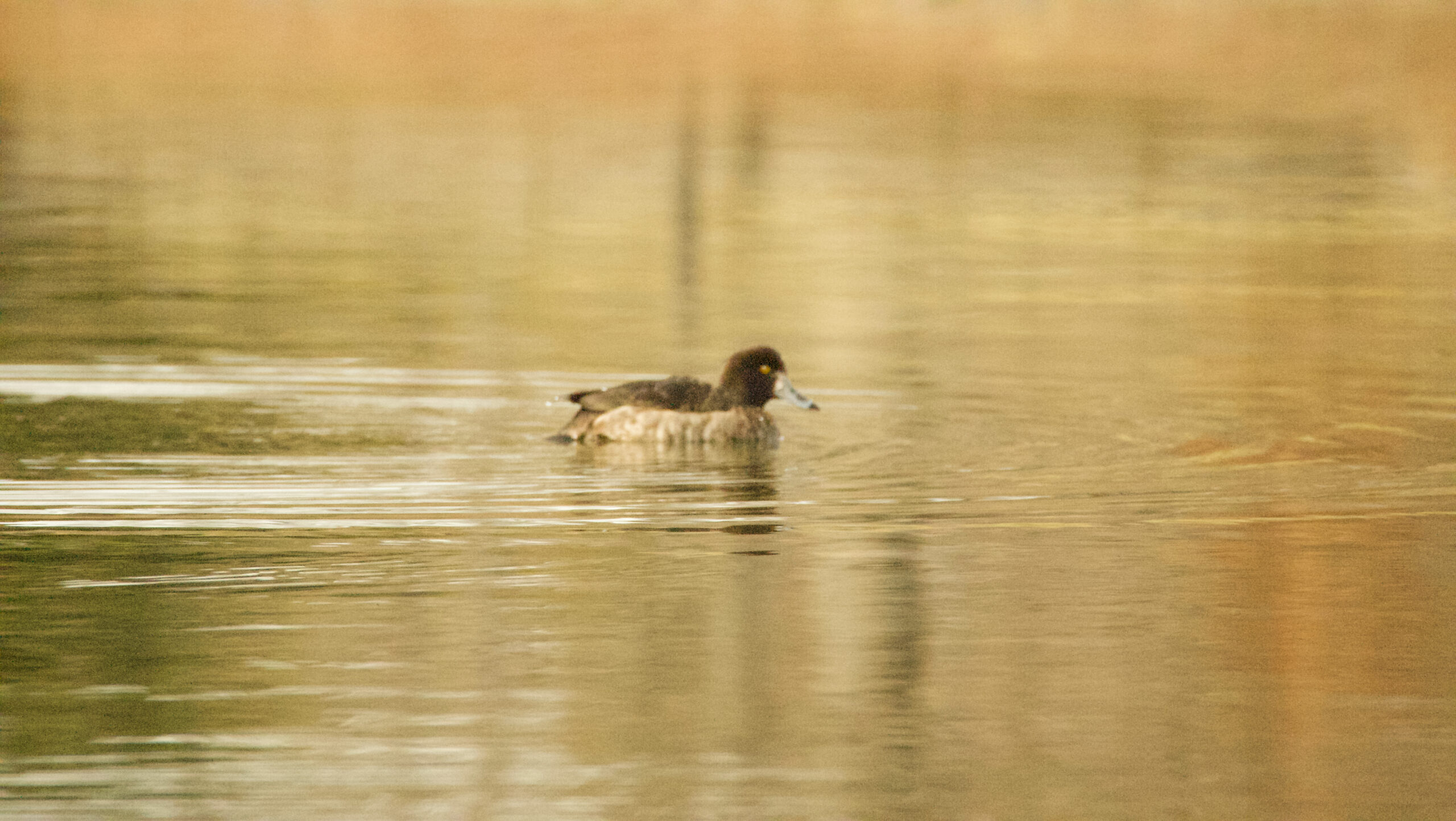
At a pond in the park, I spotted a duck-like bird I was not used to seeing. Later, when I showed the photo to my daughter, she told me it was probably a tufted duck. She said she had only ever seen spot-billed ducks at this pond before, so she was a little jealous. I was surprised too. I had not expected a bird like that to be on a neighborhood pond, and I was simply happy that I had managed to photograph something unusual at all.
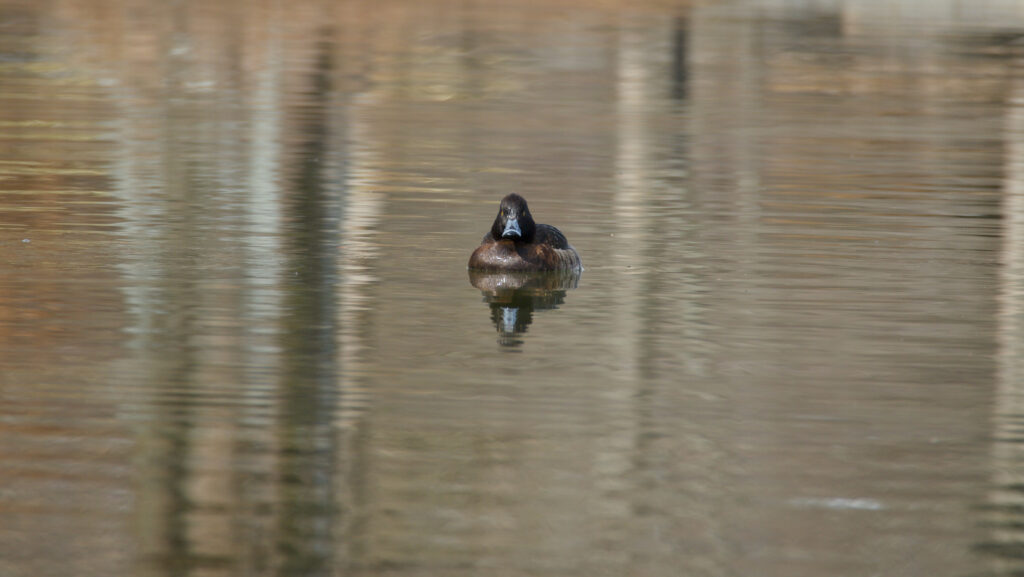
Photo: A water bird, probably a tufted duck, floating on the park pond from a long distance away
Caption: This bird was near the middle of the pond, and I really felt how difficult it was to get any closer.
It really was far away. The bird stayed close to the center of the pond, and even when I moved a little, the distance did not shrink very much. If anything, it felt as though the bird moved farther out whenever a person came near the edge. That probably did not help either. I ended up sitting quietly on a bench and watching for a while, but even then the distance never really closed.
People often say that getting closer is one of the basics of bird photography. After this, I feel that probably does not mean simply walking straight toward the bird. It may mean finding a place where the bird might come closer on its own, or waiting without moving too much. I am starting to think that “getting closer” has a more careful meaning than I first imagined.
Another thing that caught my attention was the color. Even though I took these photos in the middle of the day, the whole image looked a little brownish. At first I wondered why that would happen in such bright light. But when I looked at the pictures again, I started to think that the water was reflecting the colors of the trees and the shore around it. Those reflections were spread across most of the frame. A pond may look simple in real life, but in a photograph it seems to pick up much more color from its surroundings than I had realized.
Even so, I was glad that I managed to photograph the bird at all, and that I also got a shot with two birds swimming together. I still cannot clearly show the finer feather patterns or the face the way I would like, but for now I think the sequence itself matters: I found them, I tried photographing them, and I learned something from how difficult it was. I can still remember the slightly rushed feeling of thinking, “There are two of them together—just take the shot first.”

Photo: Two water birds, probably tufted ducks, swimming side by side on the pond
Caption: I managed to catch both birds together, but they were still very far away, so the wide pond ended up being part of the picture too.
Since starting bird photography, a lot of things have not gone the way I hoped. But when a shot does not work, I feel like I gradually understand what was difficult about it. In this case, the two biggest problems were distance and the color of the water. Next time, instead of trying to follow the birds, I want to look for a place where they might come closer to the bank and then wait. I also want to pay more attention to color when I review the photos afterward.
Someday I would like to photograph a long-tailed tit in Hokkaido on my own. But before that, it looks like I will spend a lot of time learning these basic difficulties from the birds around my local pond. Even if the birds are far away, and even if the photos do not come out the way I wanted, I feel that keeping these small records is helping me build up my understanding little by little.